On the fiftieth anniversary of the Friuli Earthquake, art and architecture give shape to a universal story of strength, memory, and reconstruction.
From 14.11.2026 to 21.02.2027
On the fiftieth anniversary of the devastating earthquake that struck Friuli in 1976, the Autonomous Region of Friuli Venezia Giulia and ERPAC present the major exhibition RINASCITE. From Leonardo da Vinci to the Contemporary.
The cultural project takes the earthquake not only as a historical anniversary, but as a starting point for a universal reflection on humanity’s ability to transform a deep fracture into a generative principle and a rebirth. It is not only a commemoration, but also an inquiry into what happened after the immense catastrophe. There was “an end and a beginning,” and this extraordinary experience of reconstruction is precisely the subject of the project’s investigation.
Fifty years later, now beyond the threshold of mere chronological remembrance, the story of Friuli reveals itself as a civil and cultural model of extraordinary relevance. “The Friuli earthquake is an integral part of regional and national history and can be viewed as a phenomenon capable of illuminating contemporary issues: the relationship between community and territory, between heritage and identity, between crisis and transformation,” explains curator Villa.
Through a rich itinerary that intertwines period documentation, masterpieces of ancient art, and works by contemporary protagonists, the exhibition explores the concept of the “second day” as defined by Gianni Rodari, correspondent for “Paese Sera”: that ideal and civic dimension in which a community understands that its destiny does not coincide with the sum of its losses and consciously chooses to design its future once again.
The exhibition does not offer a simple reconstruction of events. Instead, it interrogates a problem that runs through the history of human societies: how does a community assign meaning to destruction? Through what cultural tools does it process loss? What images, narratives, and symbolic forms make it possible to imagine a future after a rupture?
At this point, the reflection encounters the realm of images. Every society has processed its traumatic experiences through narrative, symbolic, and visual forms. Images preserve the memory of events and enable communities to organize, transmit, and comprehend the experience of loss. Through them, destruction enters the realm of culture and becomes the subject of collective reflection.
The history of Western art can also be read as a long meditation on the relationship between ruin and rebirth. Destroyed cities, ravaged landscapes, broken monuments, natural disasters, wars, and reconstructions have continuously generated images. In these, one can see the fears, hopes, questions, and answers that every era has developed in response to the experience of loss. The Friuli earthquake fits within this long cultural history.
EXHIBITION ITINERARY
The exhibition unfolds within the Esedra di Levante of Villa Manin—a place that, through its own history, embodies the concepts of endurance, memory, and transformation. The show is arranged across three levels, each one progressively broadening the perspective from local events to the broader history of Western culture.
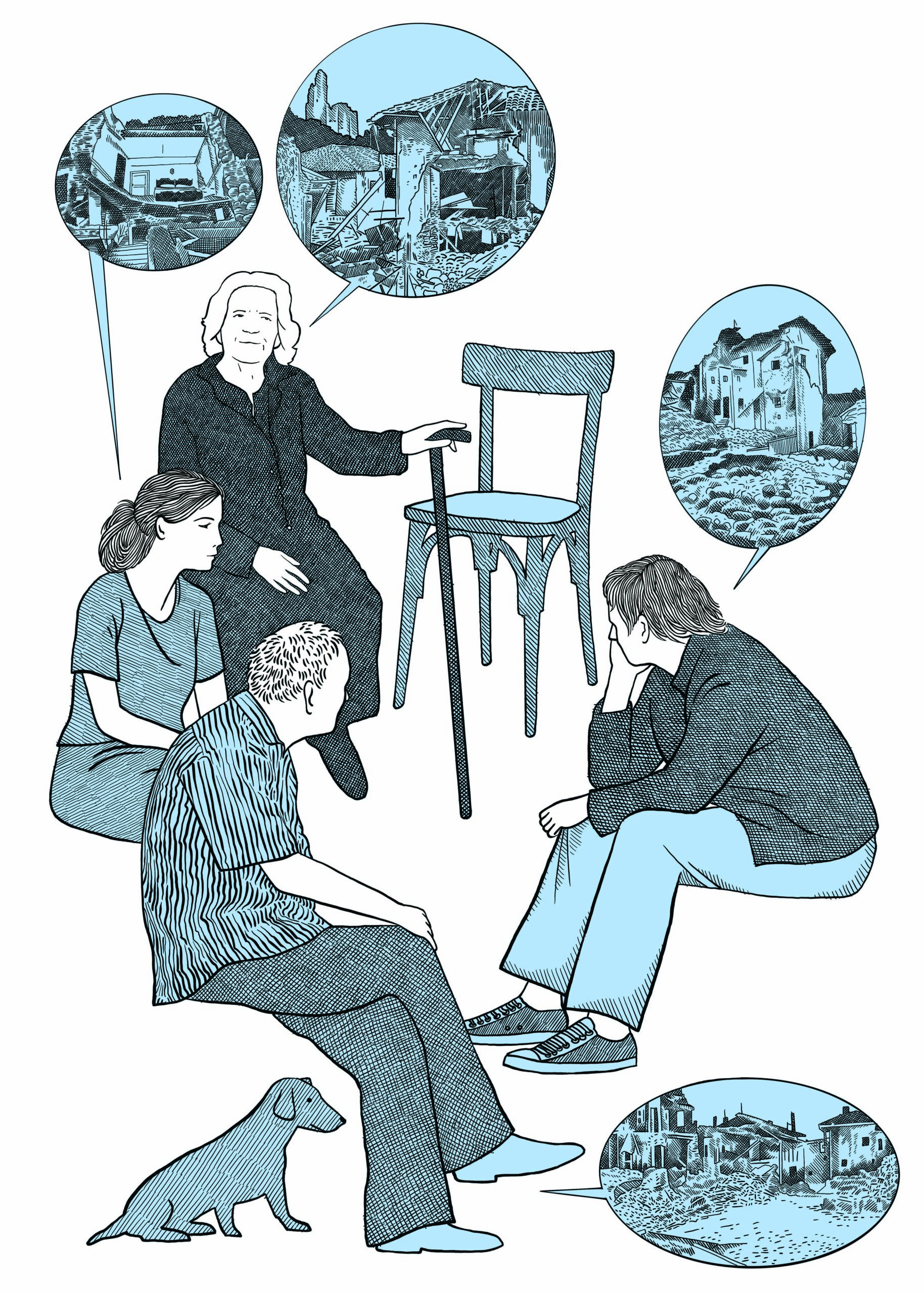
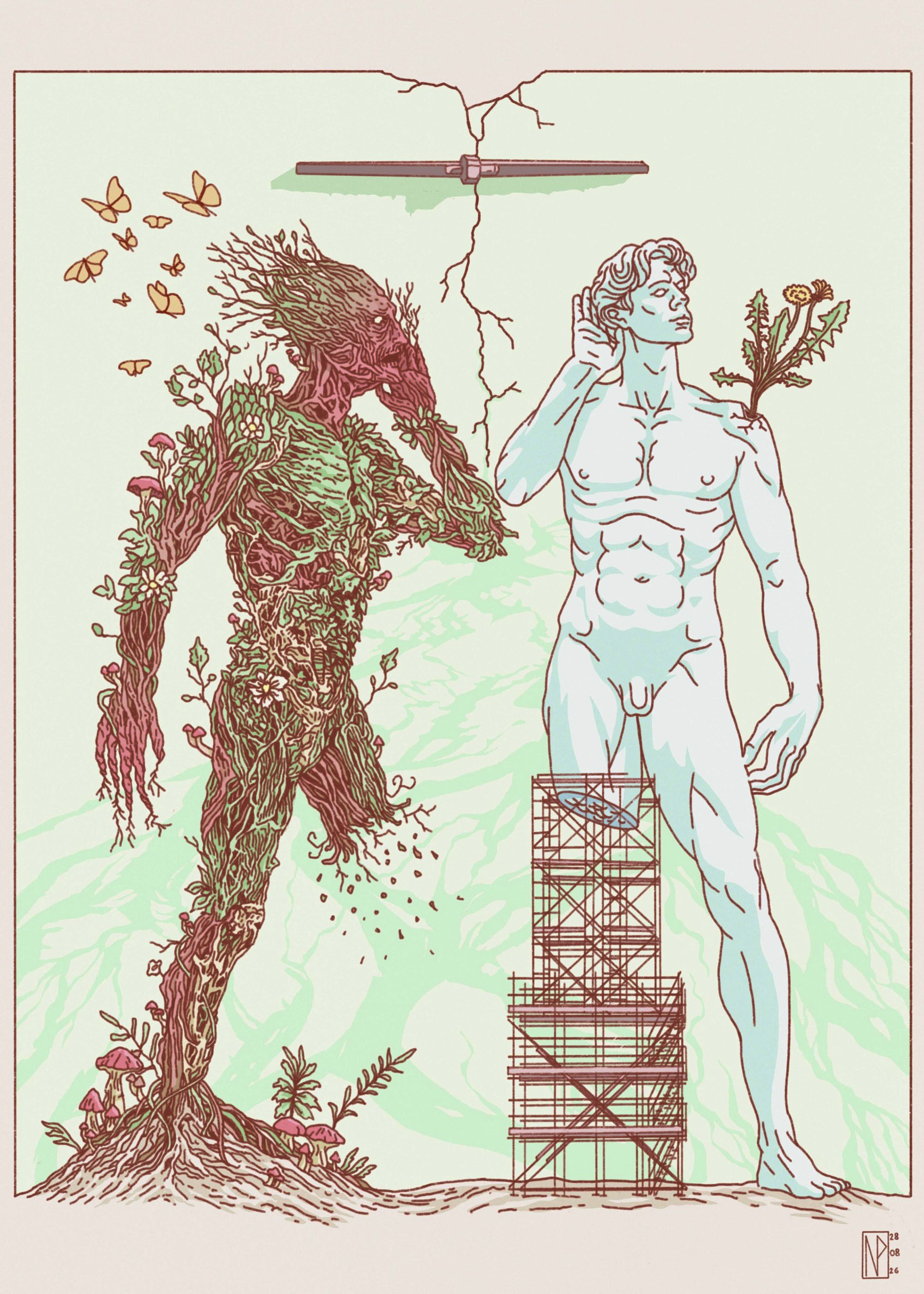
The itinerary begins on the second floor with a video introduction, immersing visitors in the moment of the event through archival television, radio, and print materials. These are complemented by a poetic counterpoint: fifteen panels commissioned from three generations of Friulian illustrators, who have translated the memory of the trauma into a universal and shareable visual narrative. The artists are: Dimitri Fogolin, Paolo Francescutto, Giovanna Giuliano, Alice Iuri, Carin Marzaro, Lorenzo Mattotti, Pietro Nicolaucich, Fabio Rodaro, Jozef Sedmak, Davide Toffolo, Elisa Turrin, and Pia Valentinis.
Illustartor section
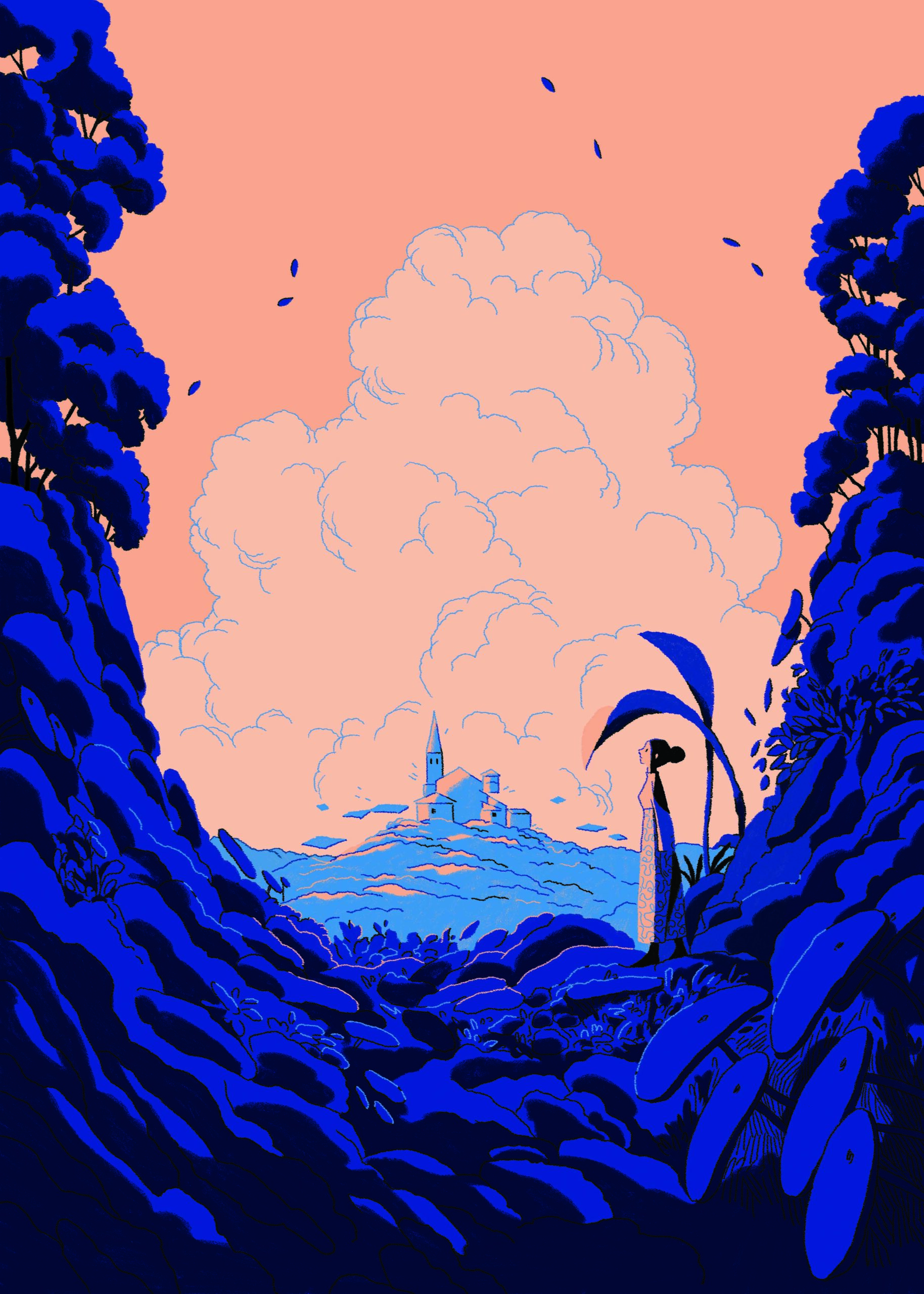
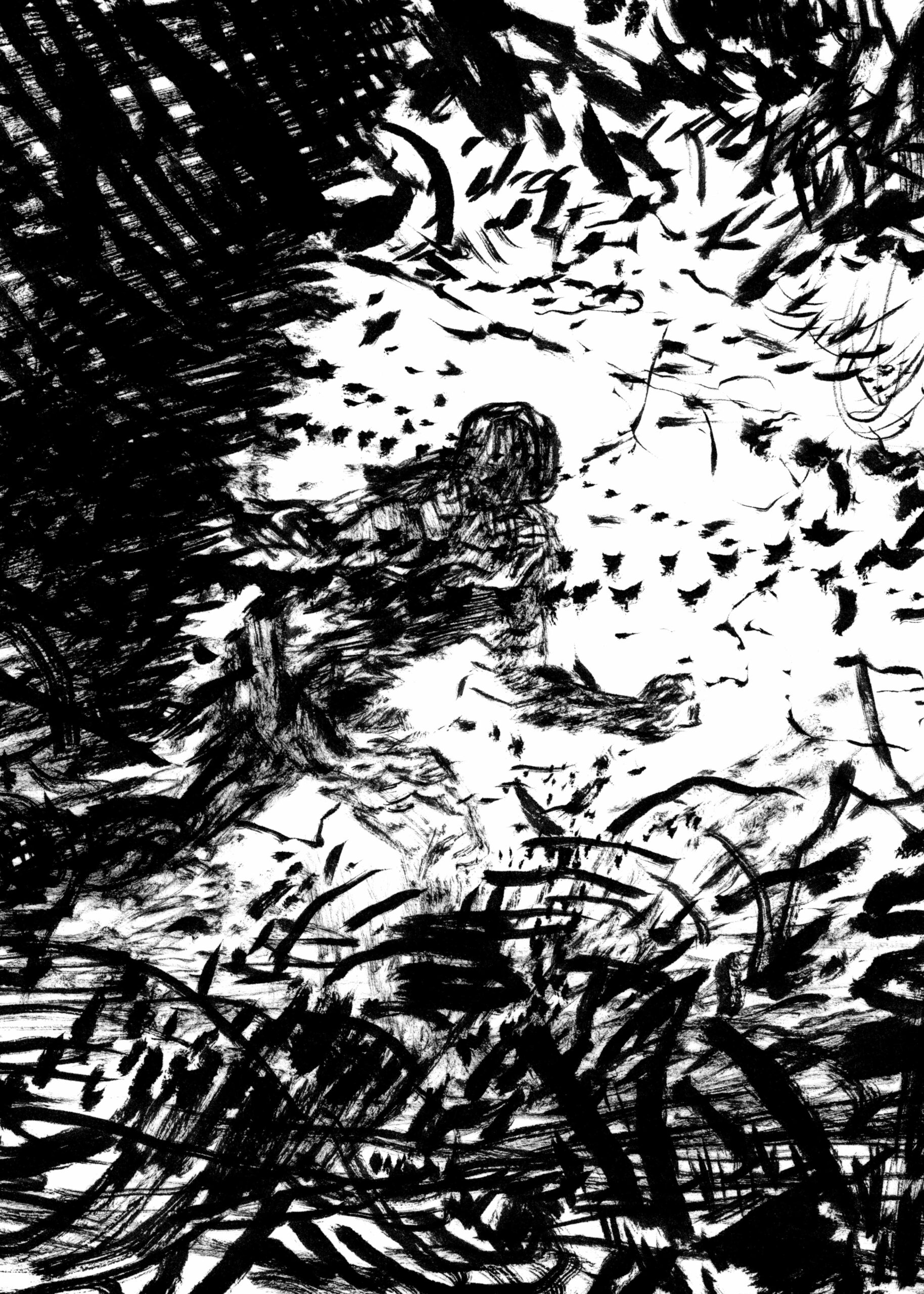
Un altro passaggio - Giovanna Giuliano
Il tavolo della comunità - Pia Velentinis
La memoria trasmessa - Pietro Nicolaucich
Le Mani - Lorenzo Mattotti
The first floor represents the civic heart of the exhibition, where the natural event gives way to the human response and the role of civic institutions: architecture, urban planning, the protection of cultural heritage—as exemplified by the remarkable anastylosis of the Venzone Cathedral—and the founding of the University of Udine. Photographs bear witness to the development of a modern collective consciousness.
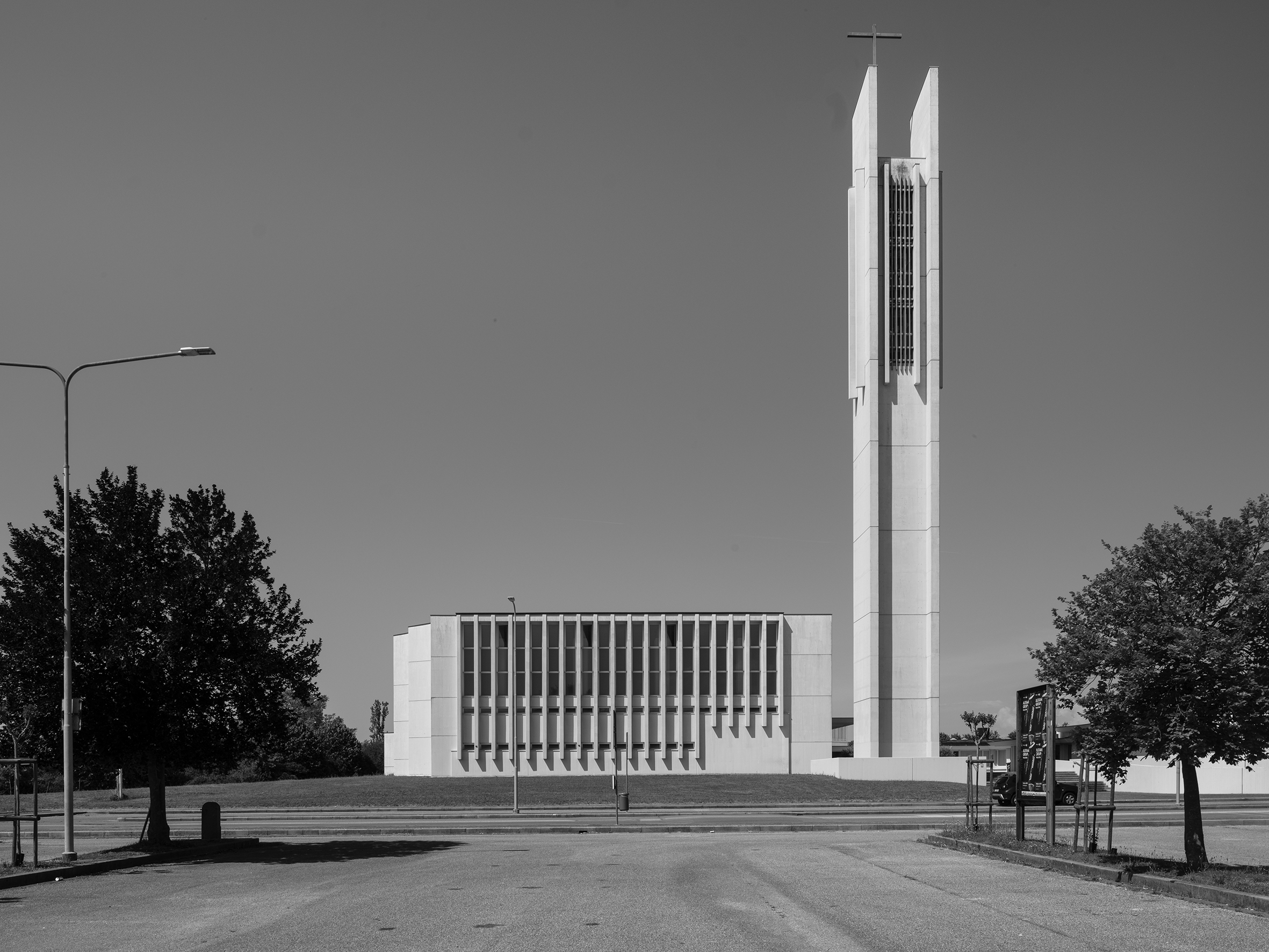
This section, dedicated to architecture and photography and held under the patronage of IUAV (the University Institute of Architecture of Venice), offers an overview of the past fifty years of regional architecture and presents the work of six contemporary photographers, each focusing on four architectural projects. Architecture is validated as one of the primary visible signs of the transformation of the territory, fully integrated into the overall itinerary of the exhibition.
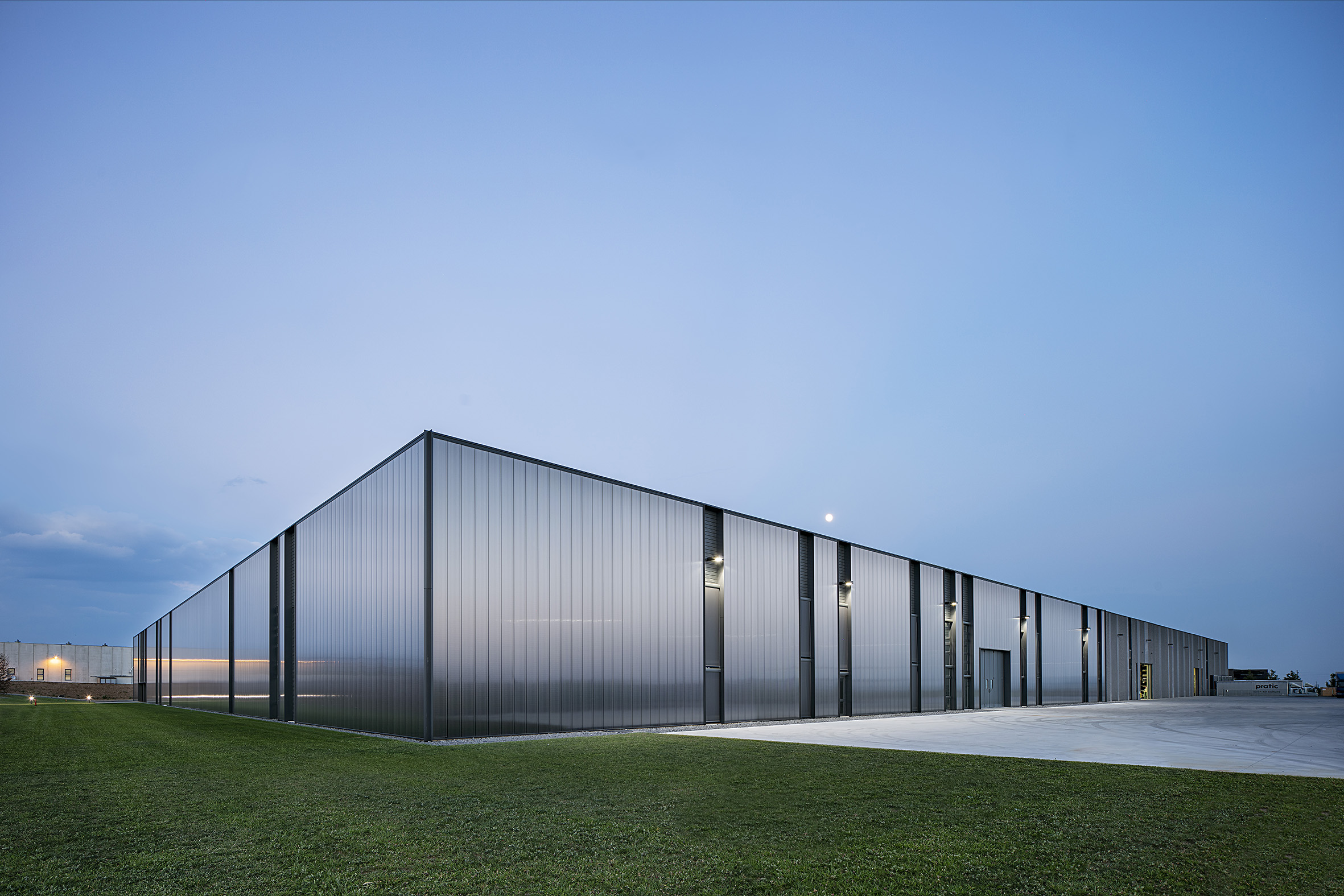
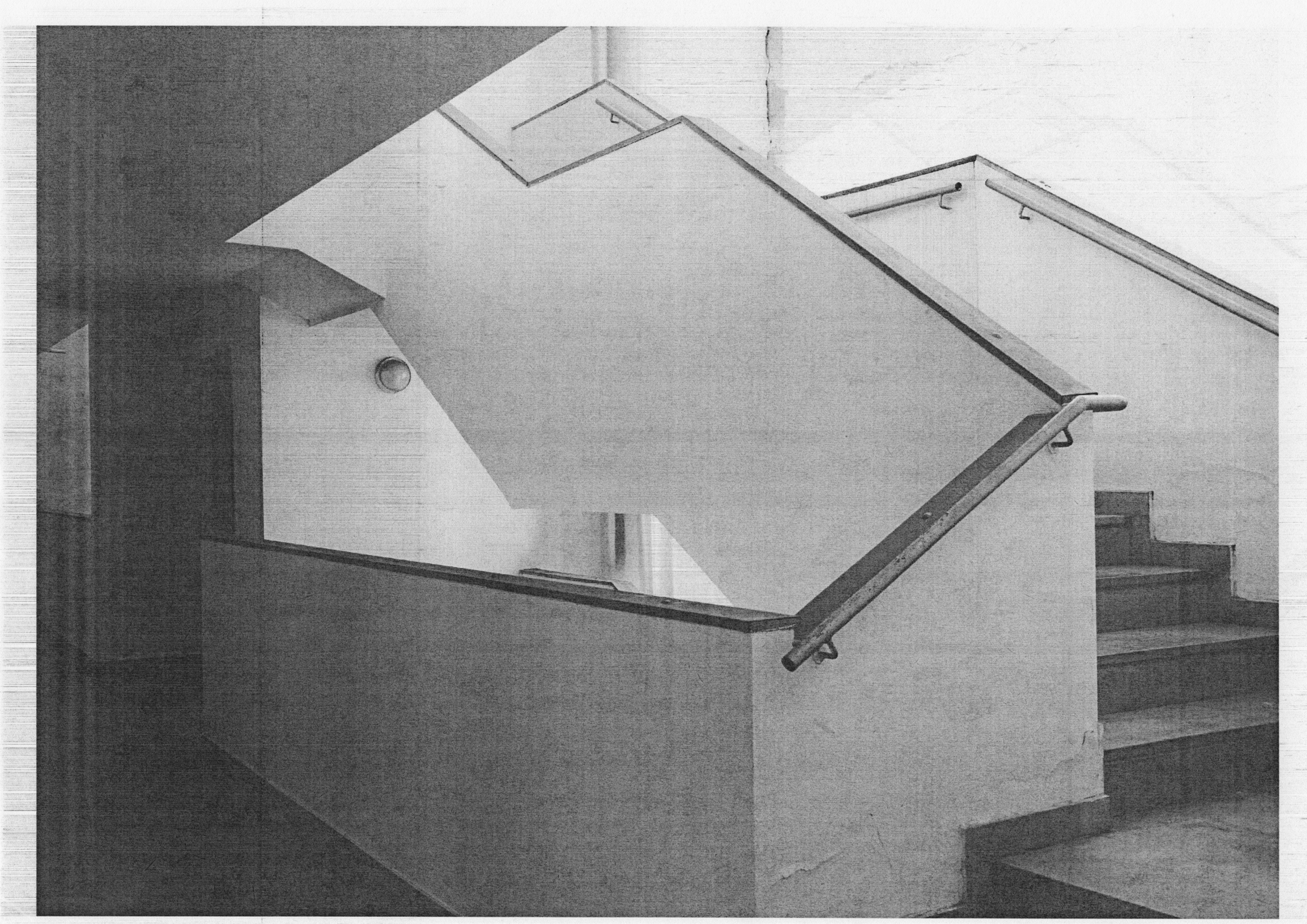
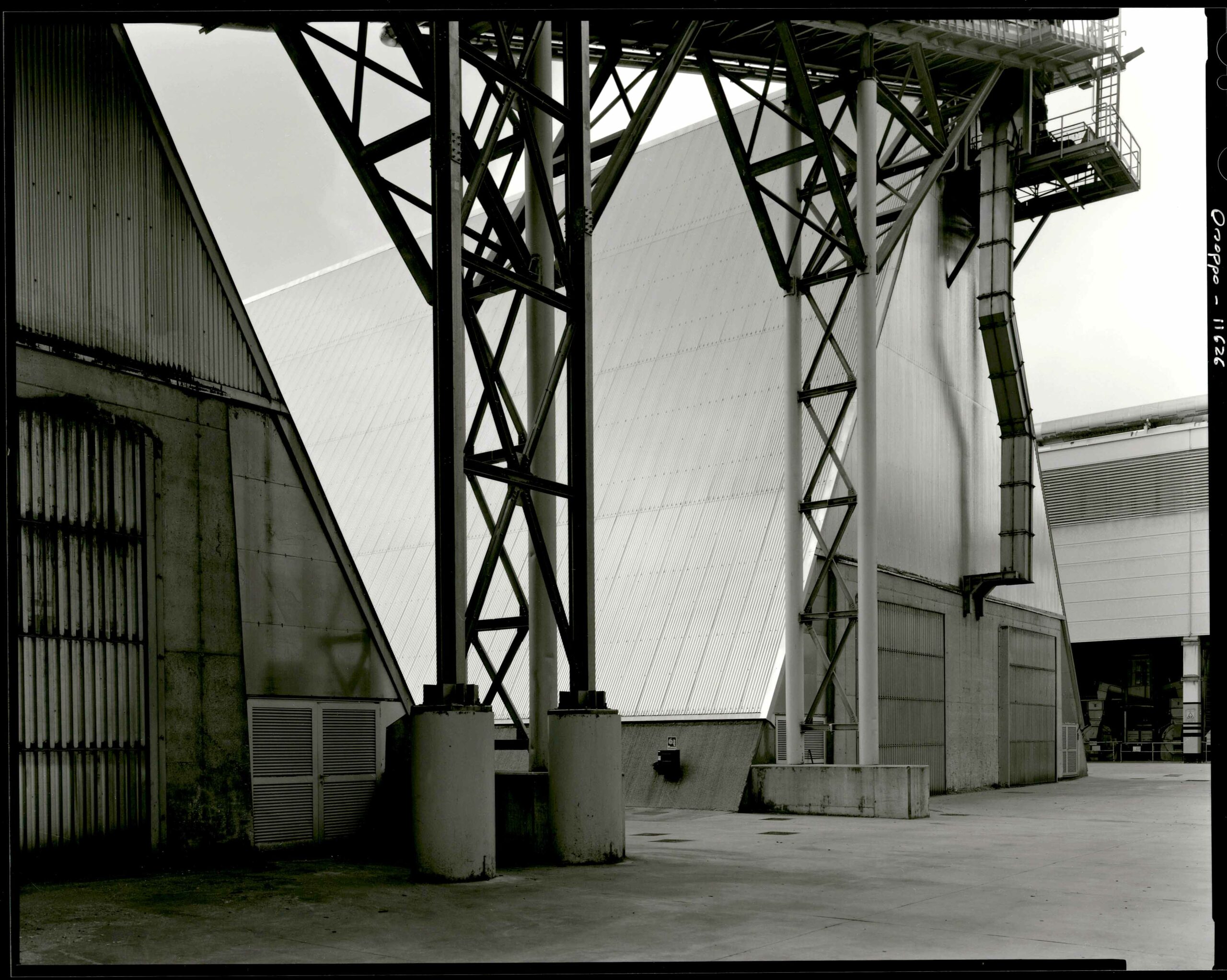
Pratic, GEZA Gri e Zucchi architettura
Largo Nocciolini - Luigi Chiapolino
Chiesa del Gesù Buon Pastore, Udine - Arch. Federico Marconi
Fantoni di Osoppo - Francesco Neri
Finally, on the ground floor, the reflection takes on a universal scope, inspired by Aby Warburg’s Mnemosyne Atlas—a “visual atlas” designed to visually map the collective memory of the West and the survival of images from classical antiquity to the twentieth century.
The Friulian experience thus enters into dialogue with the long history of art through four key words: reconsider, relive, be reborn, rebuild. This section connects historical masterpieces from prestigious institutions such as the Pinacoteca Ambrosiana, the Uffizi, the Gallerie Nazionali di Palazzo Barberini, and the Galleria Borghese in Rome with works by contemporary artists including Serse Roma, Ludovico Bomben, Maria Elisabetta Novello, and Eva Jospin, accompanied by photographic connections created by Stefano Graziani.
The exhibition entrance features an installation by Daniele Puppi, conceived to overturn the perception of space and activate the senses of visitors. The itinerary continues with works by Ludovico Bomben, who reinterprets the sacred through formal rigor and industrial materials; Maria Elisabetta Novello, who employs ash and dust as ephemeral symbols of memory and time; Serse Roma, who, through the use of graphite, sublimates landscapes and aquatic surfaces between reality and abstraction; and Eva Jospin, whose cardboard sculptures and natural elements explore the intricate boundary between landscape, myth, and scenography. Concluding the section are photographs by Stefano Graziani, which cannot be confined to any single genre, as they present visions that elicit deep reflections on the human condition, myth, nature, lost languages, and memory.
Ancient Art section
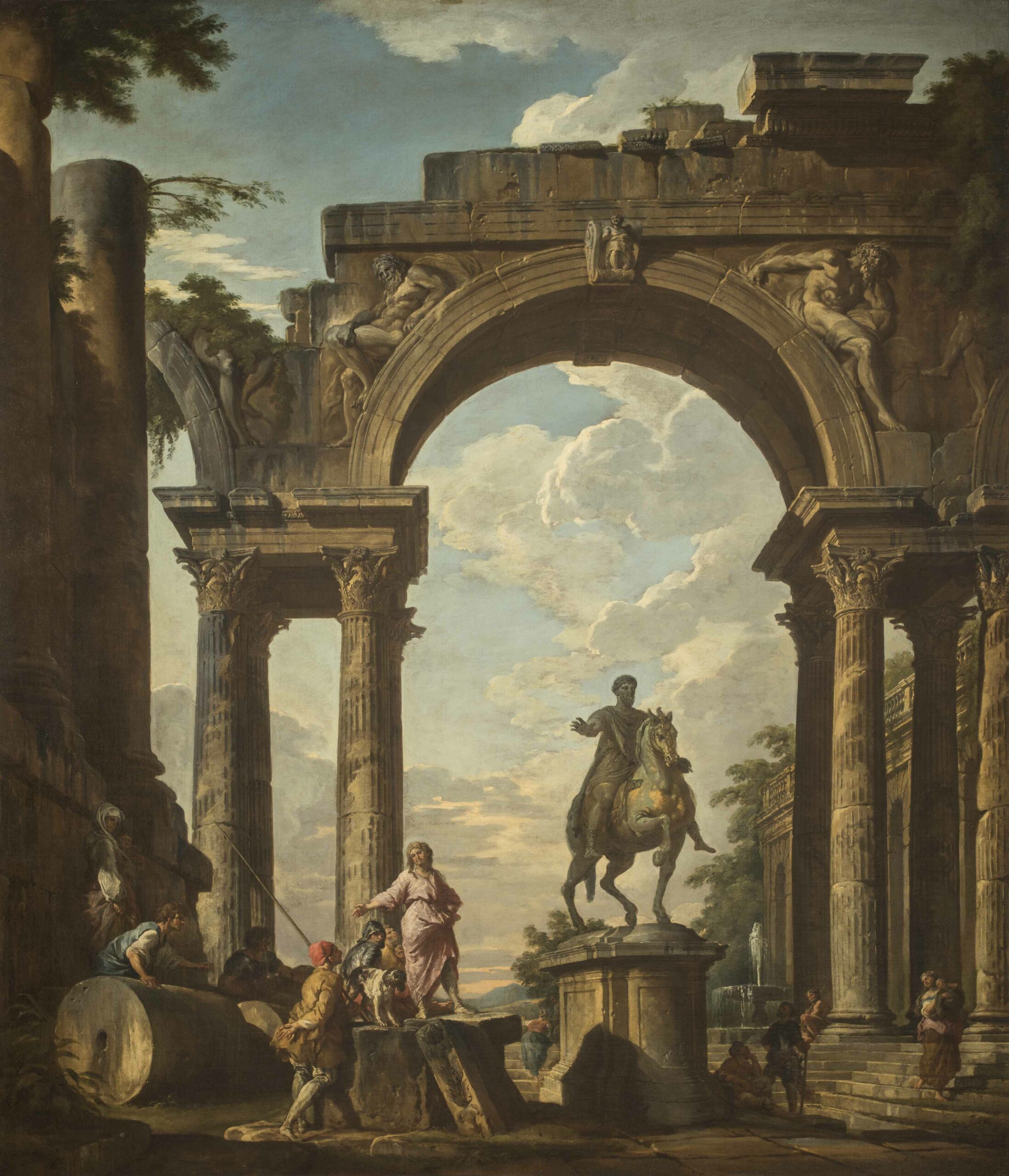
Capriccio con la statua equestre di Marco Aurelio - Giovanni Paolo Pannini
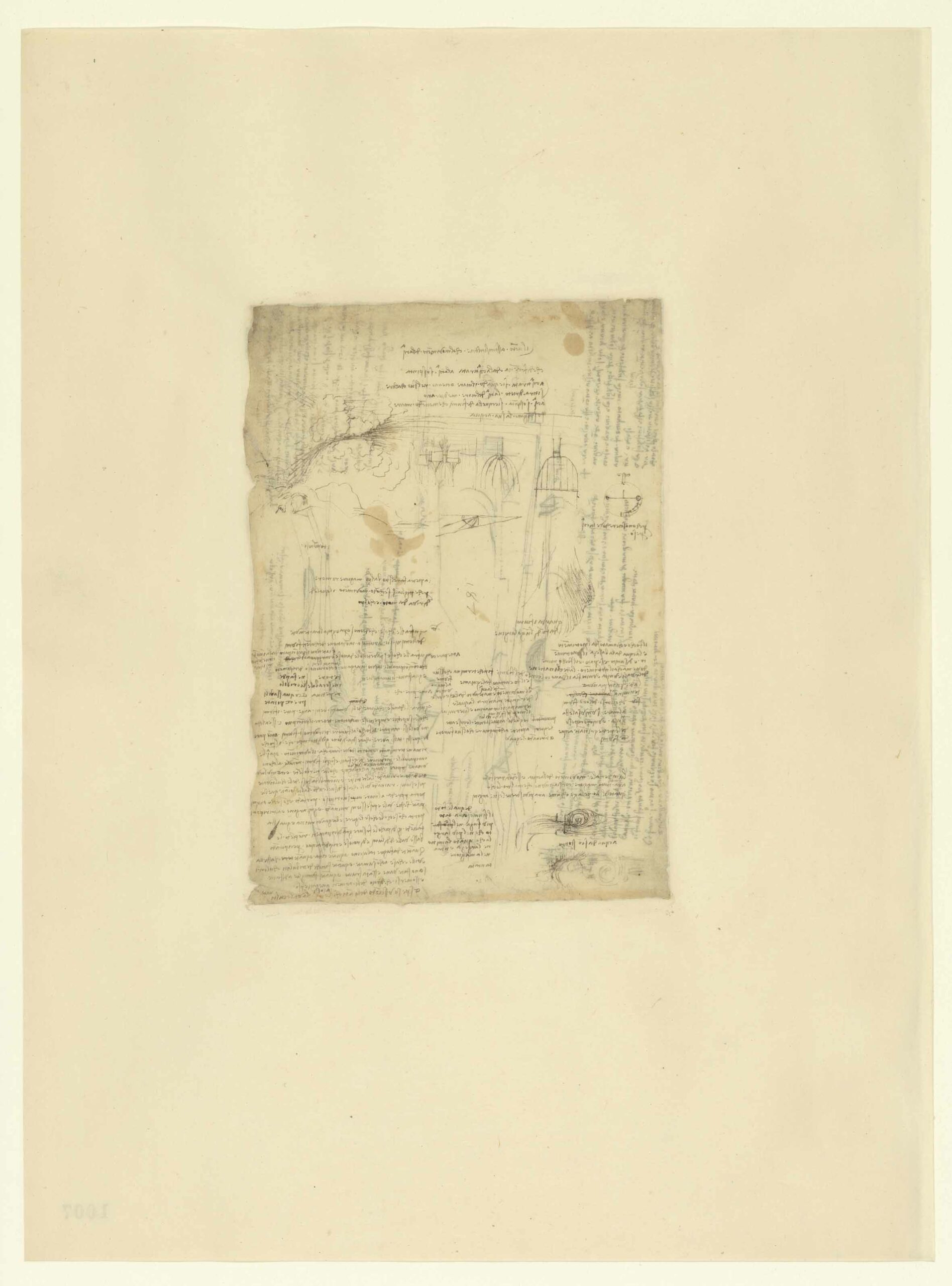
Studi dei motivi del vento e delle acque - Leonardo da Vinci
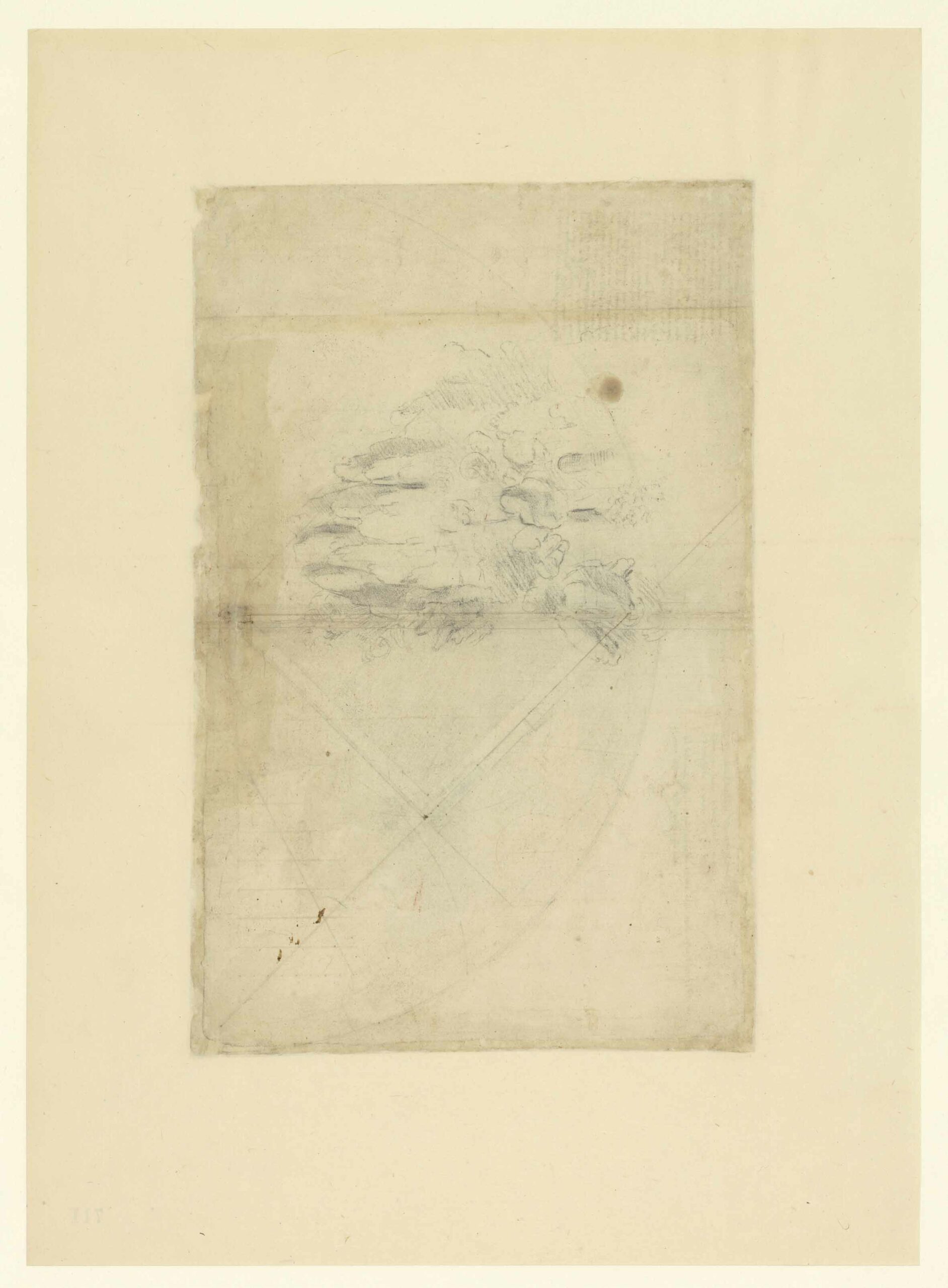
Disegno esplosione montagna - Leonardo da Vinci
Among the highlights of this section are several original sheets from Leonardo da Vinci’s Codex Atlanticus, on loan from the Biblioteca Ambrosiana in Milan. In these works, the genius of Vinci explores nature as a system of continuously transforming forces, where the destruction and regeneration of matter are part of the same dynamic process.
The President of the Autonomous Region Friuli Venezia Giulia, Massimiliano Fedriga, stated: “On the fiftieth anniversary of the earthquake, this cultural initiative is an important opportunity to renew the memory of what happened, to highlight the example set by Friuli, and to convey the principles of responsibility, solidarity, subsidiarity, and collaboration that made one of the most significant experiences of rebirth in recent republican history possible.”
Mario Anzil, Vice President and Councillor for Culture and Sports of the Autonomous Region Friuli Venezia Giulia, added: “In ‘RINASCITE. From Leonardo da Vinci to the Contemporary,’ the 1976 Friuli Earthquake is the starting point of the narrative, but the true protagonist of the exhibition is what happens afterward: the ability of a community to transform a wound into a new possibility, a loss into a project, a fracture into an act of collective construction. From this perspective, Friuli ceases to be only a virtuous historical example and becomes a principle—a way of looking to the future.”
Lydia Alessio-Vernì, Director General of the Regional Entity for the Cultural Heritage of Friuli Venezia Giulia (ERPAC), remarked: “What makes a rebirth possible? The artworks, architecture, images, documents, and testimonies gathered here suggest that no reconstruction is merely material. Cities can be rebuilt with stones, but communities are rebuilt through memory, participation, solidarity, and culture. That’s why the exhibition itinerary puts masterpieces from some of Italy’s most important institutions in dialogue with contemporary artists, photographs, documentary materials, and architectural projects.”
TICKETS AND HOUR
Tuesday – Sunday: 9:30 am to 6:00 pm
Special openings (9:30 am – 6:00 pm): Monday 7, Tuesday 8, Monday 21, Saturday 26, Monday 28, and Thursday 31 December 2026 (9:30 am – 2:30 pm); Friday 1, Monday 4, Wednesday 6 January 2027, and Monday 8 February 2027
SINGLE TICKETS Available online, at the exhibition, and via call center
Full price: €12 Reduced: €8 (over 65, Disability Card holders, FVG Card, Touring Club, FAI) Reduced Plus: €5 (minors aged 11–17, students over 18 and university students up to age 26 with valid ID) Free: Children up to 10, companions of disabled visitors, journalists, ICOM members, licensed tour guides
First Sunday of the Month €5 Ticket valid for everyone (except for those eligible for free admission) on the first Sundays of the month (06/12/2026; 03/01/2027; 07/02/2027)
For reduced or free admission, appropriate documentation must be shown at the ticket office on the day of the visit. Without it, as per the purchase agreement, the visitor cannot upgrade the ticket, request cancellation, or a refund.
PACKAGES Family Package: €14 Valid for one adult and one minor under 18. Entry must be simultaneous, and both tickets must be used together.
OPEN TICKET €15 Valid for one entry, no date or time restrictions. This ticket can also be given as a gift.
GROUPS (reservation required) Full price: €10 Reduced: €7 (minors aged 11–17) Free: Children up to 10 Groups: minimum 15, maximum 25 people, with one free accompanying adult
SCHOOLS (reservation required) Reduced: €4 (secondary schools) Free: Primary schools Groups: minimum 15, maximum 25 students, up to four free accompanying teachers
If using your own guide, a “whisper” audio system (not provided by the organizers) is mandatory.
GUIDED TOURS By reservation only, through the dedicated call center, for groups of 15 to 25. Online purchase available for scheduled guided tours every Sunday at 3:00 pm. Full price + guided tour: €19 (€20 in another language) Reduced + guided tour: €15 (€16 in another language) Reduced Plus + guided tour: €12 (€13 in another language) Free + guided tour: €7 (€8 in another language)
The same reductions and free admission policies as single tickets apply. Except for school groups, guided tours will use a microphone system, included in the tour cost. Unauthorized guided tours are not permitted.
VISIT THE EXHIBITION AND DISCOVER VILLA MANIN Present your full-price ticket for “RINASCITE. From Leonardo da Vinci to the Contemporary” at the Villa Manin ticket office for a reduced ticket to visit the Villa, and from December 19, also the exhibition “Nicola Benois Scenographer of the Twentieth Century.” Likewise, showing your full-price ticket for the Villa or the “Nicola Benois” exhibition at the RINASCITE exhibition ticket office entitles you to a reduced ticket for “RINASCITE. From Leonardo da Vinci to the Contemporary.”
ADDITIONAL SERVICES
AUDIOGUIDE €5 (available in Italian and English) Audioguide rental ends 60 minutes before exhibition closing time.
WHISPER MICROPHONE SYSTEM RENTAL €40 For groups with their own guide who do not have their own system.
OTHER INFO
Bags and backpacks can be stored free of charge in the available lockers.
For conservation reasons, drawings and paintings may not be photographed, even without flash.
Access and services are available for visitors with disabilities.
Umbrellas, animals, food, and drinks are not permitted. Baby carriers are allowed inside the exhibition. Smartphones must be kept in silent mode during your visit.
The “Bonus Docente” and “18App” payment schemes are not accepted.